

Brain Fog, Fatigue, and Aging: The NAD+ Connection
Why energy and mental clarity decline with age, and how NAD+ supports mitochondrial function, brain health, and steady focus without stimulants.

By Emma Clarke

Key takeaways
- —NAD+ levels decline roughly 50% by age 50, directly affecting cellular energy production and brain function
- —Mitochondrial dysfunction from low NAD+ may contribute to both physical fatigue and mental fog
- —Research in aged mice shows NAD+ precursor supplementation can rescue neurovascular coupling and improve cognitive function
- —NAD+ supports circadian rhythm regulation, which governs your natural energy cycles
- —Unlike caffeine, NAD+ supports energy at the cellular level without crashes or jitters
That Familiar Feeling: When Your Energy Just Isn't What It Used To Be
You slept seven hours. You had your coffee. You ate a reasonable lunch. And yet, by 2 PM, your brain feels like it's running through wet sand.
If you're in your mid-thirties or older, you've probably noticed this pattern intensifying. The fatigue isn't dramatic — it's a slow erosion. You recover more slowly from late nights. You need more coffee to reach the same baseline. Complex tasks that once felt natural now require conscious effort.
Most people chalk this up to stress, aging, or "just getting older." And while lifestyle factors certainly play a role, there's a deeper mechanism at work — one that starts inside your cells, in the tiny powerhouses called mitochondria.
Your Cells Run on NAD+
Every cell in your body produces energy through mitochondria. These organelles convert the food you eat into ATP — the molecule your cells actually use as fuel. And the essential molecule that drives this entire process is NAD+ (nicotinamide adenine dinucleotide).
NAD+ acts as the central electron carrier in your mitochondrial energy chain. Without sufficient NAD+, the whole system slows down. Glycolysis, the TCA cycle, oxidative phosphorylation — every stage of cellular energy production depends on adequate NAD+ levels.
Here's the problem: NAD+ levels decline significantly with age. Research documents a roughly 50% drop in NAD+ by age 50 compared to age 20, measured across human skin, blood, liver, muscle, and brain tissue. This decline isn't a minor footnote — it's a fundamental shift in how your cells produce energy.
Why the decline happens
The drop in NAD+ isn't caused by one thing. It's a convergence of factors:
- —Increased consumption: Chronic low-grade inflammation drives enzymes like CD38 and PARPs to consume more NAD+ for immune signaling and DNA repair
- —Decreased recycling: The NAMPT enzyme, which recycles NAD+ through the salvage pathway, loses efficiency with age
- —A vicious cycle: Low NAD+ causes mitochondrial dysfunction, which generates oxidative stress, which further depletes NAD+
The result is cells that produce less energy, repair themselves more slowly, and accumulate damage faster. In practical terms, that translates to the fatigue and mental slowness that creep in during your thirties and forties.
NAD+ and Your Brain: More Than Just Energy
Your brain is the most energy-demanding organ in your body. It represents about 2% of your body weight but consumes roughly 20% of your total energy. When cellular energy production falters, the brain feels it first.
But NAD+'s role in brain function goes beyond raw energy supply.
Neurovascular coupling: keeping blood flowing where it's needed
A landmark 2019 study by Kiss et al. at the University of Oklahoma examined what happens to brain blood flow regulation in aging — and whether NAD+ supplementation could help. In aged mice, they found that NAD+ precursor supplementation rescued cerebromicrovascular endothelial function and neurovascular coupling. This is the mechanism by which your brain directs blood flow to whichever region is most active at any given moment.
The results were striking: the aged mice showed significantly improved spatial working memory and gait coordination. In other words, restoring NAD+ levels didn't just improve cellular energy — it improved the brain's ability to think and move.
Neuroprotection through sirtuin activation
NAD+ also fuels the sirtuin family of enzymes — particularly SIRT1 and SIRT3, which play direct roles in brain health. SIRT1 promotes mitochondrial biogenesis (the creation of new mitochondria) and helps regulate inflammation. SIRT3 protects against oxidative stress in neurons. When NAD+ levels are low, these protective pathways run at reduced capacity.
Research from David Sinclair's lab at Harvard demonstrated that declining NAD+ creates what they call a "pseudohypoxic state" — where cells behave as if they're starved of oxygen even when they're not. This disruption of nuclear-mitochondrial communication, published in a 2013 study by Gomes et al., is one of the key mechanisms linking NAD+ decline to age-related cognitive changes.
Your Internal Clock Runs on NAD+ Too
There's another dimension to the fatigue puzzle that often gets overlooked: your circadian rhythm.
NAD+ levels naturally fluctuate throughout the day, and this rhythm is tightly linked to your body's internal clock. NAD+ influences the activity of SIRT1, which in turn regulates core circadian clock genes. When NAD+ levels are chronically low, this feedback loop weakens.
The practical impact? Your natural energy peaks and valleys become less defined. You feel sluggish in the morning when you should feel alert. You get wired at night when you should be winding down. The crisp rhythm of energy and rest blurs into a flat line of persistent tiredness.
This is one reason why people who supplement with NAD+ often report improvements in sleep quality and morning alertness — sometimes before they notice changes in afternoon energy levels. Supporting the circadian machinery helps the whole system run more smoothly.
Why Coffee Isn't the Answer (Even Though It Helps)
Let's be honest: caffeine works. It blocks adenosine receptors, making you feel less tired. But it doesn't address the reason you're tired in the first place.
Caffeine is a signal blocker, not an energy source. It masks fatigue without changing anything at the cellular level. And it comes with well-known downsides — tolerance buildup, sleep disruption, afternoon crashes, and anxiety in sensitive individuals.
NAD+ supplementation works on a fundamentally different level. Rather than blocking tiredness signals, it supports the actual machinery that produces cellular energy. Think of it this way: caffeine is like turning up the volume on a weak radio signal. NAD+ is like strengthening the signal itself.
This doesn't mean you need to give up your morning coffee. But if you're stacking cup after cup just to function, the underlying issue might not be a caffeine deficiency — it might be an energy production problem at the cellular level.
Practical Steps for Supporting Your Energy and Mental Clarity
1. Address the cellular foundation
Consider supporting your NAD+ levels directly. NAD+ supplementation — particularly formulas that combine direct NAD+ with complementary ingredients like trans-resveratrol for sirtuin activation, niacinamide for the salvage pathway, and TMG for methylation support — targets the root mechanism behind age-related energy decline.
2. Move your body regularly
Exercise is one of the most powerful natural ways to stimulate NAD+ production. Even moderate activity boosts NAMPT activity and mitochondrial biogenesis. A 2021 trial of 48 amateur runners (Liao et al.) showed that combining exercise with NAD+ precursor supplementation improved aerobic capacity beyond exercise alone.
3. Protect your sleep
Poor sleep accelerates NAD+ decline by increasing inflammation and oxidative stress. Prioritize consistent sleep timing, cool sleeping environments, and limiting screen exposure before bed.
4. Eat for mitochondrial health
Foods rich in B vitamins, polyphenols, and omega-3 fatty acids support the metabolic pathways that NAD+ fuels. Think oily fish, leafy greens, berries, and whole grains.
5. Manage chronic stress
Sustained stress drives inflammation, which drives NAD+ consumption. Regular stress management — whether through movement, meditation, or simply spending time outdoors — helps preserve your NAD+ reserves.
The Bottom Line
Brain fog and fatigue aren't inevitable consequences of getting older. They're symptoms of cellular changes — particularly declining NAD+ levels — that affect how efficiently your brain and body produce energy. The science is still evolving, but the evidence increasingly points to NAD+ as a central player in age-related energy decline.
Supporting your NAD+ levels through smart supplementation, regular exercise, and good sleep habits may help you reclaim the mental clarity and sustained energy that shouldn't have to fade with age.
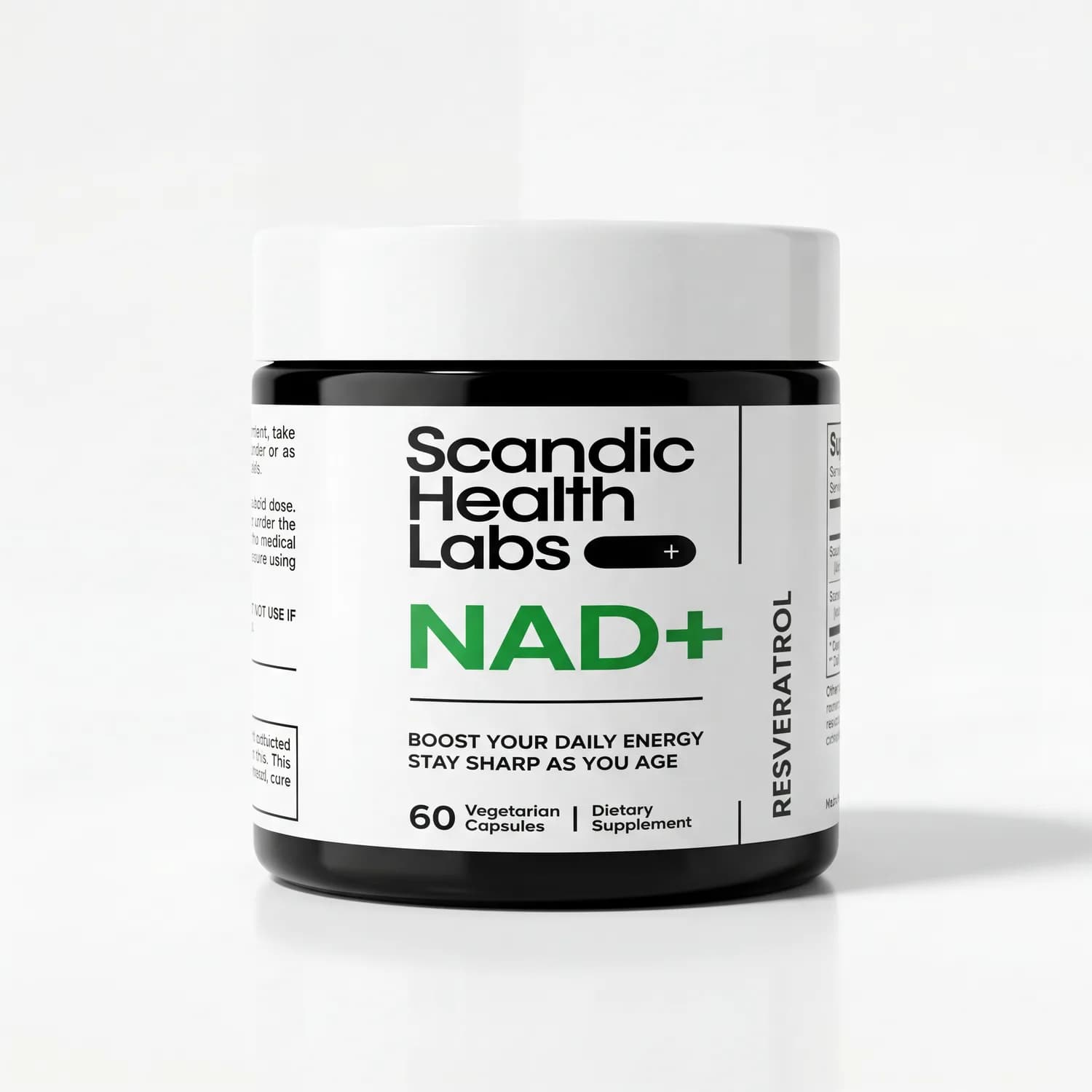
Scandic Health Labs NAD+ combines 500 mg direct NAD+ with trans-resveratrol, niacinamide, and TMG — four synergistic ingredients designed to support your cellular energy from multiple angles. Two capsules daily, taken with a meal, to help your cells do what they're built to do.
7 min read