

5 Signs Your NAD+ Levels May Be Declining
Persistent fatigue, brain fog, slow recovery — these everyday complaints may trace back to falling NAD+ levels. Here are five signs to watch for.

By Emma Clarke

Key takeaways
- —NAD+ is a coenzyme involved in over 500 enzymatic reactions, including energy production, DNA repair, and sirtuin activation
- —Levels decline naturally with age — roughly 50% by age 50 — and the effects can be subtle at first
- —Recognising the signs early gives you a chance to support your cells before the decline compounds
Why NAD+ Levels Matter More Than You Think
NAD+ (nicotinamide adenine dinucleotide) is not a vitamin or a mineral. It is a coenzyme that exists in every living cell in your body, and it is involved in more than 500 enzymatic reactions. Without adequate NAD+, your mitochondria cannot produce energy efficiently, your DNA repair enzymes (PARPs) lose their fuel, and your sirtuin enzymes — often called the longevity genes — slow down.
The problem is that NAD+ levels are not static. Research shows they decline steadily with age, driven by increased consumption from chronic inflammation (which ramps up CD38 and PARP activity) and decreased synthesis (the NAMPT enzyme that recycles NAD+ becomes less efficient over time). The result is a vicious cycle: low NAD+ leads to mitochondrial dysfunction, which generates oxidative stress, which depletes NAD+ further.
Here are five signs that this cycle may already be affecting you.
1. Persistent Fatigue — Even When You Sleep Enough
You get seven or eight hours of sleep. You drink your coffee. But by mid-afternoon, your energy just drops — and no amount of rest seems to fully recharge you.
The NAD+ connection: Your mitochondria are the power plants of every cell, and NAD+ is their essential fuel. It serves as the central electron carrier in oxidative phosphorylation — the process that produces ATP, your body's universal energy currency. When NAD+ levels fall, mitochondrial efficiency drops. Your cells produce less ATP from the same amount of food, and the subjective experience is a kind of fatigue that sleep alone cannot fix.
This is different from the tiredness caused by a bad night or a busy week. It is a persistent, low-grade energy deficit that does not respond well to rest because the bottleneck is not sleep — it is cellular fuel.
2. Brain Fog and Poor Concentration
You lose your train of thought mid-sentence. Simple decisions feel harder than they should. Focus requires more effort than it used to.
The NAD+ connection: Your brain consumes roughly 20% of your body's total energy despite being only 2% of your body weight. It is exceptionally sensitive to changes in mitochondrial efficiency. When NAD+ drops, neurons produce less ATP, and energy-intensive processes like sustained attention and working memory are the first to suffer.
Beyond raw energy, NAD+ also supports cerebrovascular health. A 2019 study by Kiss et al. at the University of Oklahoma found that NAD+ precursor supplementation rescued neurovascular coupling — the mechanism that directs blood flow to active brain regions — and significantly improved spatial working memory in aged mice. When your brain cannot efficiently direct blood to the areas that need it most, the result feels like fog.
3. Slow Recovery From Exercise
Your workouts have not changed, but recovery has. Muscle soreness lasts longer. You feel more depleted after the same run or gym session.
The NAD+ connection: Exercise creates controlled stress — muscle fibres sustain micro-damage, mitochondria work hard, and the repair processes that follow are what make you stronger. NAD+ is central to this entire cycle. It fuels the mitochondria during exertion, it powers the PARP enzymes that repair exercise-induced DNA damage, and it activates SIRT3, a sirtuin enzyme that protects against oxidative stress in muscle tissue.
A 2021 trial involving 48 amateur runners (Liao et al.) showed that NAD+ precursor supplementation improved aerobic capacity, oxygen utilisation, and recovery times. When NAD+ is low, your repair machinery works slower — and you feel it as extended soreness and reduced stamina.
4. Skin Showing Age Faster Than Expected
Fine lines seem to be appearing faster. Your skin looks duller or thinner. Recovery from sun exposure or minor irritation takes longer.
The NAD+ connection: Your skin cells are among the most metabolically active in your body. They divide frequently, they face constant UV exposure, and they rely on robust DNA repair to maintain integrity. NAD+ is the sole substrate for PARP1 and PARP2, the enzymes responsible for detecting and fixing single-strand DNA breaks in skin cells.
When NAD+ levels fall, DNA damage accumulates faster than it can be repaired. This accelerates the visible signs of ageing: collagen breakdown, thinning, loss of elasticity. Research by Gomes et al. (2013) at Harvard showed that declining NAD+ induces a "pseudohypoxic state" — essentially, cells behave as if they are starved of oxygen — which disrupts the communication between the nucleus and mitochondria. In skin cells, this translates to impaired renewal and repair.
5. Metabolic Changes That Feel Out of Your Control
Weight seems harder to manage. Blood sugar feels less stable. Your body responds differently to the same diet it used to handle well.
The NAD+ connection: NAD+ plays a direct role in metabolic regulation. It activates SIRT1, which promotes fat metabolism and mitochondrial biogenesis. It supports the efficiency of glycolysis and the TCA cycle — the core pathways that convert food into energy. When NAD+ drops, these pathways slow down, and your body becomes less efficient at processing nutrients.
The Yoshino et al. (2021) trial at Washington University provided some of the strongest human evidence for this link. Postmenopausal women with prediabetes who took 250 mg/day of an NAD+ precursor for 10 weeks saw approximately 25% improvement in muscle insulin sensitivity, along with favourable changes in gene expression related to lipid metabolism. The metabolic changes you notice with age are not just about willpower — they reflect underlying shifts in cellular efficiency.
What You Can Do About It
NAD+ decline is a natural part of ageing, but it is not something you have to accept passively. The science is still growing, but there are practical steps supported by current research:
- —Consider NAD+ supplementation. Clinical trials using 250–500 mg/day of NAD+ precursors have shown measurable benefits across energy, metabolism, cardiovascular health, and exercise performance. Look for a formula that includes synergistic co-ingredients — resveratrol to activate sirtuins, TMG to support methylation, and B3 to feed the NAD+ salvage pathway.
- —Exercise regularly. Physical activity naturally stimulates NAMPT, the enzyme that recycles NAD+ through the salvage pathway.
- —Prioritise sleep. Circadian rhythm disruption accelerates NAD+ decline. Consistent sleep supports the enzymes that maintain NAD+ levels.
- —Reduce chronic inflammation. Inflammation drives CD38 activity, one of the biggest NAD+ consumers. An anti-inflammatory diet and stress management can help.
The Bottom Line
These five signs — persistent fatigue, brain fog, slow recovery, accelerated skin ageing, and stubborn metabolic changes — are common, and most people write them off as "just getting older." They may be. But they also map directly to what happens when NAD+ levels fall and cellular processes lose their fuel.
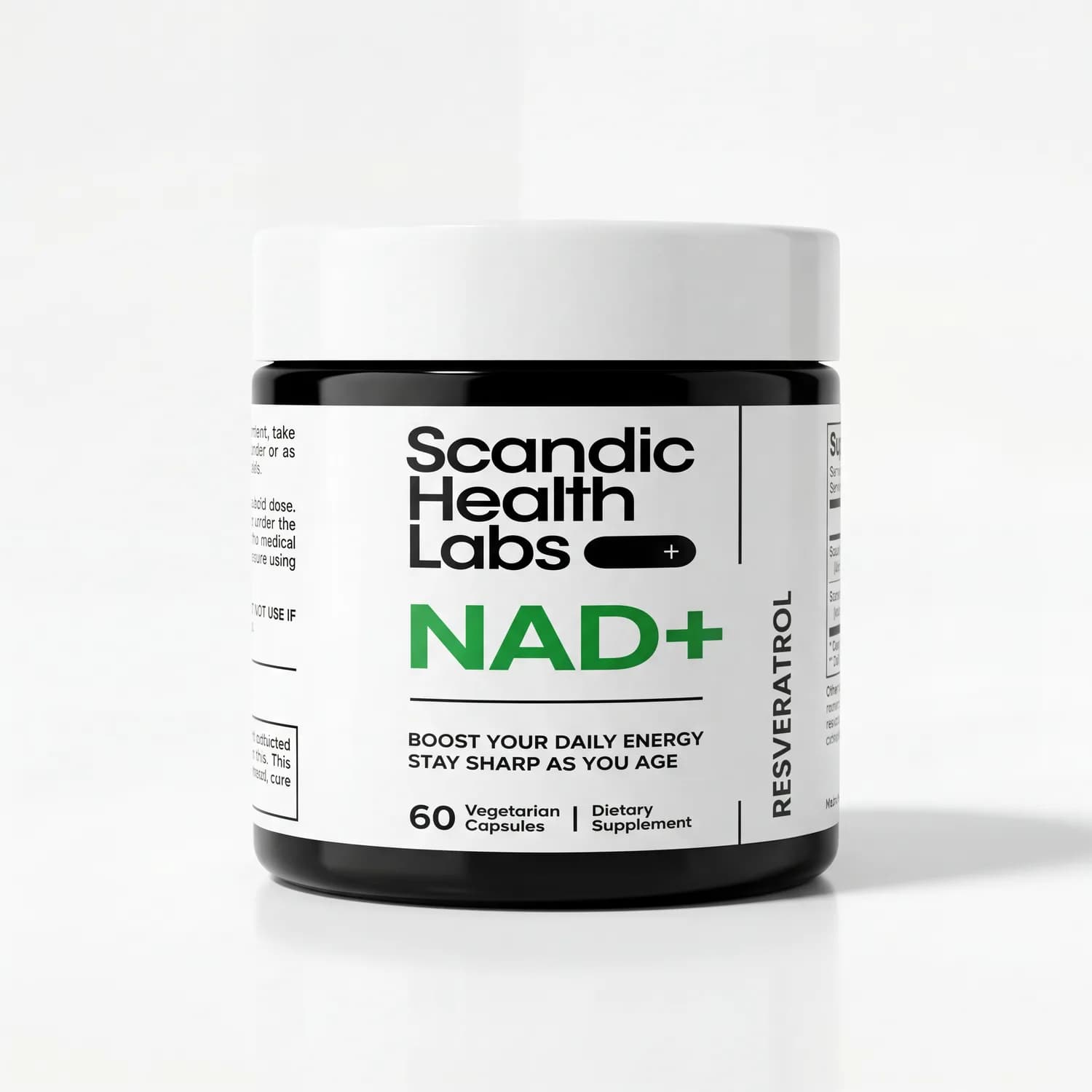
At Scandic Health Labs, our NAD+ formula was designed to address this decline with a complete, four-ingredient approach: 500 mg NAD+, 250 mg trans-resveratrol, 150 mg niacinamide, and 100 mg TMG — two capsules daily, taken with a meal. Because supporting your cells is one of the most practical things you can do for how you feel every day.
6 min read