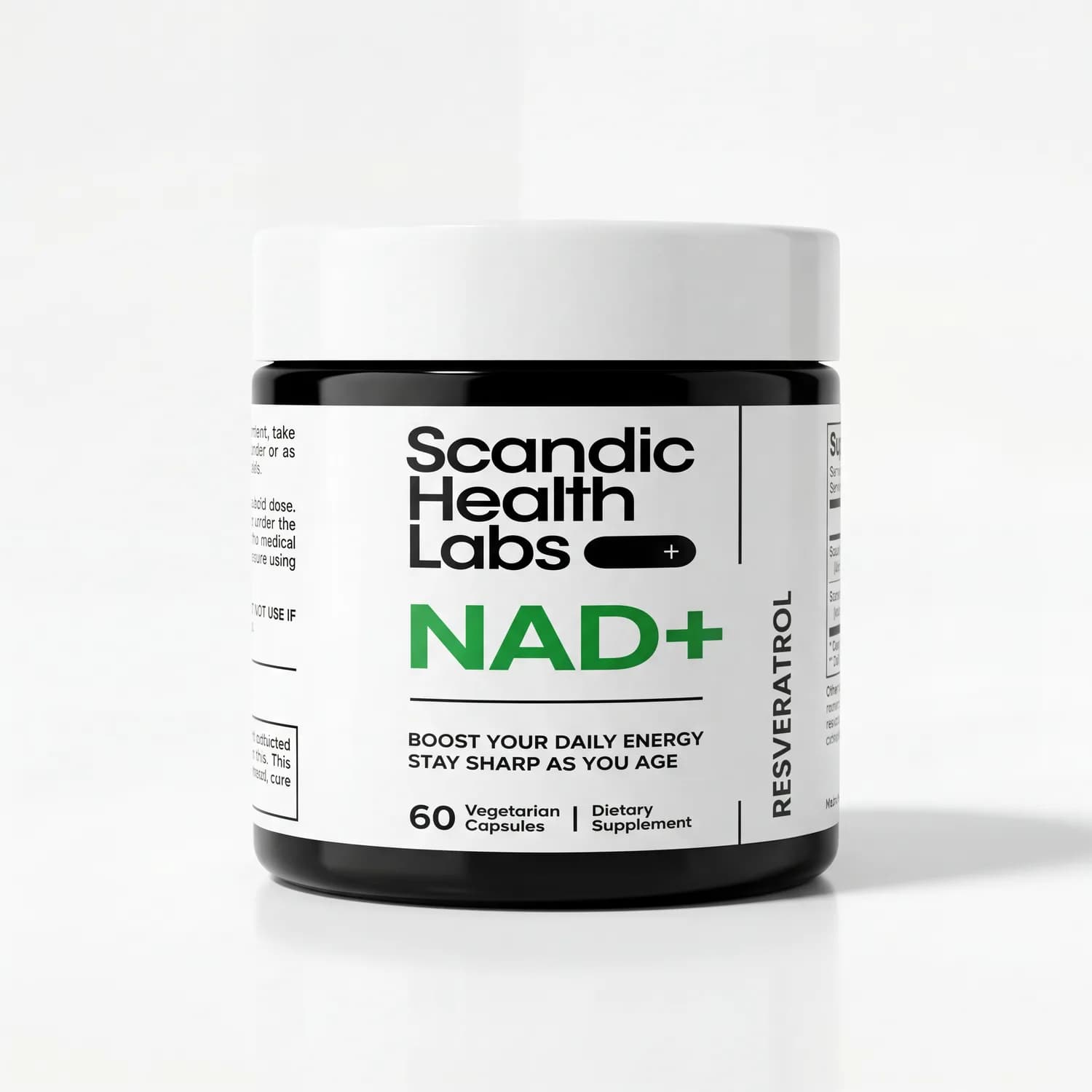


The 4-Ingredient NAD+ Formula: Why Synergy Beats Single Ingredients
Most NAD+ supplements use one ingredient. Science shows a synergistic formula with resveratrol, B3, and TMG may work better. Here's why the combination matters.

By Sarah Mitchell
Key takeaways
- —Most NAD+ supplements contain a single ingredient, but the NAD+ pathway involves multiple steps that benefit from combined support
- —Resveratrol activates the sirtuin enzymes that NAD+ fuels — without activation, high NAD+ levels alone may underperform
- —TMG replenishes methyl groups consumed during NAD+ metabolism, supporting safe long-term supplementation
- —A well-designed formula addresses the full NAD+ cycle, not just one piece of it
The Problem With Single-Ingredient Supplements
Walk into any health store or browse any supplement website and you will find dozens of NAD+ products. Most of them contain a single ingredient — either NAD+ itself, NMN (nicotinamide mononucleotide), or NR (nicotinamide riboside). Take one capsule, raise your NAD+ levels, done.
It sounds simple. And to be fair, the research supports that single-ingredient NAD+ supplementation does raise blood NAD+ levels. That part works.
But raising NAD+ levels is not the whole story. What matters is what happens after NAD+ enters your cells. And that is where single-ingredient formulas leave work on the table.
Understanding the NAD+ Pathway
To understand why synergy matters, you need a basic picture of how NAD+ works inside your body.
NAD+ does not float around your cells doing one thing. It participates in a network of interconnected processes:
- NAD+ fuels sirtuins — the enzymes often called "longevity genes" — which regulate everything from mitochondrial health to DNA repair to inflammation
- Sirtuins need to be activated — having fuel available is not the same as turning the engine on
- NAD+ gets consumed and recycled — the salvage pathway rebuilds NAD+ from its breakdown products, but this pathway needs its own raw materials
- NAD+ metabolism uses up methyl groups — critical molecular units that your body needs for gene expression, detoxification, and neurotransmitter production
A single-ingredient supplement addresses step one. A thoughtfully designed formula addresses all four.
The Gas Tank and the Ignition Key
David Sinclair, the Harvard geneticist whose lab has produced some of the most influential NAD+ research, uses a metaphor that cuts through the complexity: NAD+ is the fuel in the gas tank. Resveratrol is the ignition key.
Having a full tank of fuel does nothing if the engine is not running. NAD+ provides the substrate that sirtuins need to function, but sirtuins — particularly SIRT1, the primary longevity sirtuin — benefit from direct activation. That is what resveratrol does.
What the Research Shows
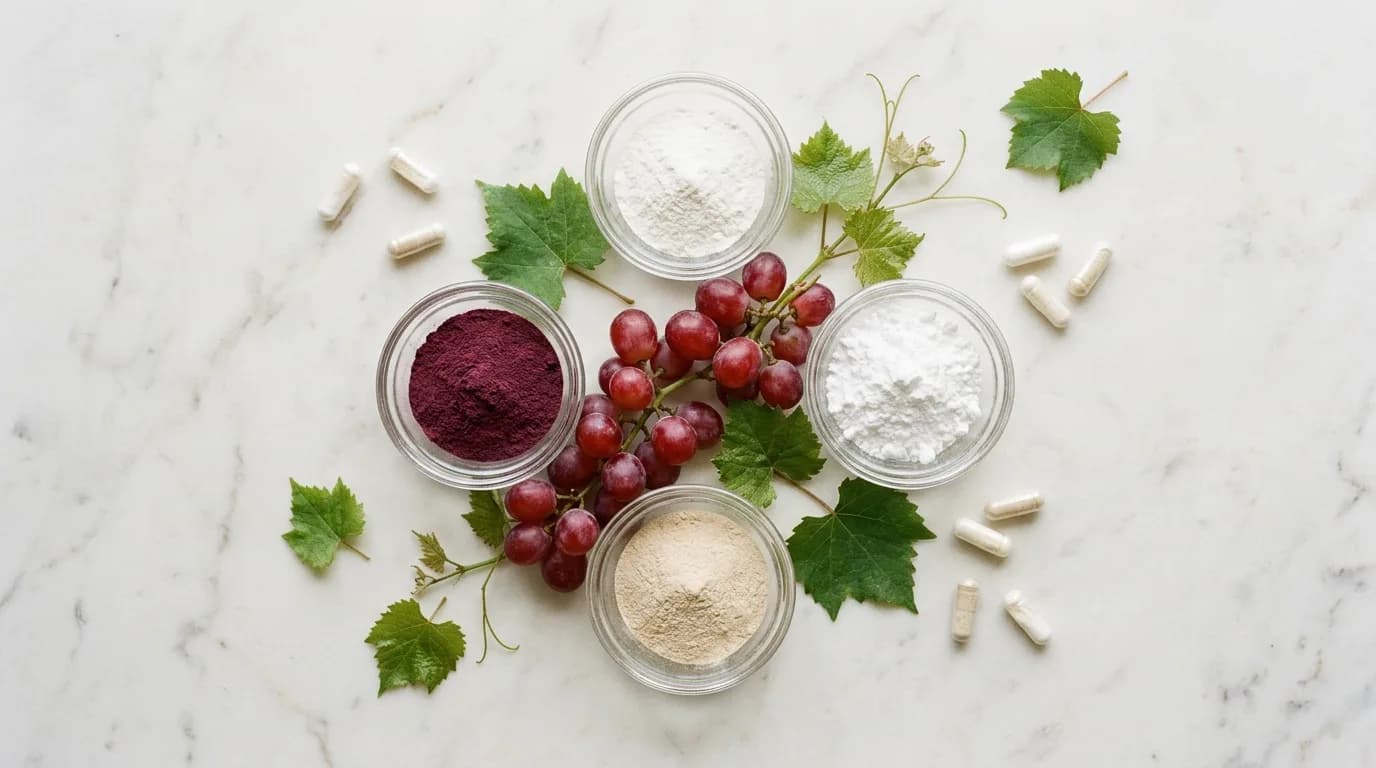
Trans-resveratrol is a polyphenol found naturally in red grape skins and Japanese knotweed. The 99% pure trans form — the biologically active isomer — has been extensively studied for its ability to activate SIRT1.
The synergy data is compelling. Research has demonstrated that combining NAD+ with resveratrol increased NAD+ levels by 1.59 times in heart tissue and 1.72 times in skeletal muscle compared to NAD+ supplementation alone. That is not a marginal improvement — it is a meaningful amplification of the core supplement's effect.
Beyond sirtuin activation, resveratrol brings its own benefits to the formula:
- —Antioxidant protection that reduces oxidative stress — one of the drivers of NAD+ depletion
- —Cardiovascular support through improved endothelial function
- —Anti-inflammatory properties via NF-kB pathway inhibition
- —Neuroprotection — resveratrol crosses the blood-brain barrier, which many supplements cannot
This is why most longevity researchers do not take NAD+ precursors alone. They combine them with resveratrol. Our formula builds this synergy into a single serving.
The Backup Pathway: Vitamin B3 as Niacinamide
Your body does not just use NAD+ once and discard it. It recycles NAD+ through what is called the salvage pathway — a biochemical recycling system that converts NAD+ breakdown products back into usable NAD+.
This salvage pathway depends on a key enzyme called NAMPT, and it uses niacinamide (a form of vitamin B3) as a precursor. Think of it as dual-route delivery:
- —Direct NAD+ provides immediate cellular availability — it enters the pool right away
- —Niacinamide feeds the recycling machinery that keeps NAD+ levels sustained throughout the day
Why does this matter? Because a single dose of NAD+ creates a spike that your body metabolizes over hours. Adding niacinamide ensures the salvage pathway stays active even as the direct NAD+ gets used up. You get both the initial boost and the sustained background production.
One practical note: niacinamide is specifically chosen over niacin (nicotinic acid) because it does not cause the uncomfortable flushing reaction that niacin is known for. Same NAD+ pathway support, without the red face and tingling skin.
The Responsible Companion: TMG
This is the ingredient that separates a thoughtful formula from a basic one. And it is the ingredient most budget supplements leave out entirely.
TMG — trimethylglycine, also known as betaine — is a methyl donor. To understand why that matters, you need to know what happens when your body metabolizes NAD+ and its precursors.
The Methylation Problem
NAD+ metabolism consumes methyl groups. These are small molecular units (a carbon atom bonded to three hydrogen atoms) that your body uses for hundreds of critical processes:
- —Gene expression — methyl groups turn genes on and off through DNA methylation
- —Detoxification — your liver uses methylation to process and eliminate toxins
- —Neurotransmitter production — serotonin, dopamine, and melatonin synthesis all require methylation
- —Homocysteine regulation — methylation converts the amino acid homocysteine into beneficial methionine
When you take high-dose NAD+ supplements without replenishing methyl groups, you risk creating an imbalance. The NAD+ metabolism draws down your methyl reserves, which can lead to elevated homocysteine levels — an amino acid that, when elevated, is an independent risk factor for cardiovascular issues.
How TMG Solves This
TMG donates three methyl groups per molecule, directly feeding the methylation cycle. It converts homocysteine back into methionine, keeping levels in a healthy range. It replenishes the methyl groups that NAD+ metabolism consumes.
This is not a theoretical concern. It is the reason that longevity researchers like David Sinclair include TMG in their personal supplement protocols alongside NAD+ precursors. When asked about it publicly, Sinclair has been clear: TMG is the responsible companion to NAD+ supplementation.
Most single-ingredient NAD+ products ignore this entirely. Our formula includes 100 mg of TMG per serving — enough to support methylation balance alongside the 500 mg NAD+ dose.
Putting It All Together
Here is how the four ingredients work as a system:
| Ingredient | Role | Metaphor |
|-----------|------|----------|
| NAD+ (500 mg) | Direct cellular fuel | The gasoline |
| Trans-Resveratrol (250 mg) | Sirtuin activation | The ignition key |
| Niacinamide (150 mg) | Salvage pathway support | The refinery that keeps producing fuel |
| TMG (100 mg) | Methyl group replenishment | The oil that keeps the engine running clean |
Remove any one ingredient and the system still works — but not as well. NAD+ without resveratrol means fuel without activation. NAD+ without niacinamide means a spike without sustained production. NAD+ without TMG means potential methylation depletion over time.
What About NMN and NR?
You may be wondering about NMN (nicotinamide mononucleotide) and NR (nicotinamide riboside), two popular NAD+ precursors. Both are well-studied and both work — they raise NAD+ levels through different intermediate steps in the biosynthetic pathway.
A 2026 head-to-head comparison study found that NAD+ precursors comparably elevate chronic baseline NAD+ levels, while plain nicotinamide showed only a transient effect. The choice between direct NAD+, NMN, and NR is less important than what else you take alongside it.
That is the central point: the companion ingredients matter as much as the primary ingredient. A well-formulated stack outperforms a higher dose of a single molecule.
How to Evaluate Any NAD+ Supplement
Whether you choose our formula or another, here is what to look for:
- —Does it include a sirtuin activator? Resveratrol or similar compounds that activate the enzymes NAD+ fuels
- —Does it support the salvage pathway? Niacinamide or another precursor that feeds the recycling system
- —Does it include a methyl donor? TMG or another methylation support ingredient for long-term safety
- —Is the dosing backed by research? Clinical trials typically use 250-500 mg per day for NAD+ precursors
- —Is the resveratrol in the trans form? Only trans-resveratrol is biologically active; cis-resveratrol is essentially inert
The Bottom Line
Single-ingredient NAD+ supplementation is not wrong — it is incomplete. The NAD+ pathway is a system, and systems work best when every component gets support.
The Scandic Health Labs NAD+ formula was designed around this principle. Four ingredients, each with a specific role, working together to support the full NAD+ cycle: direct supply, sirtuin activation, salvage pathway maintenance, and methylation balance. Not four random additions to justify a higher price — four deliberate choices backed by the same research that guides what longevity scientists actually take themselves.
Because the question is not just whether you are raising your NAD+ levels. It is whether you are giving your cells everything they need to use it.
8 min read